
Death is something most of us prefer not to think about.
As a child, I had already experienced its devastating impact when my older brother was killed in a car accident. I was only nine years old. His death left a deep mark on our family.
But witnessing death and believing your own life may be ending are very different experiences.
Mine began quite innocently.
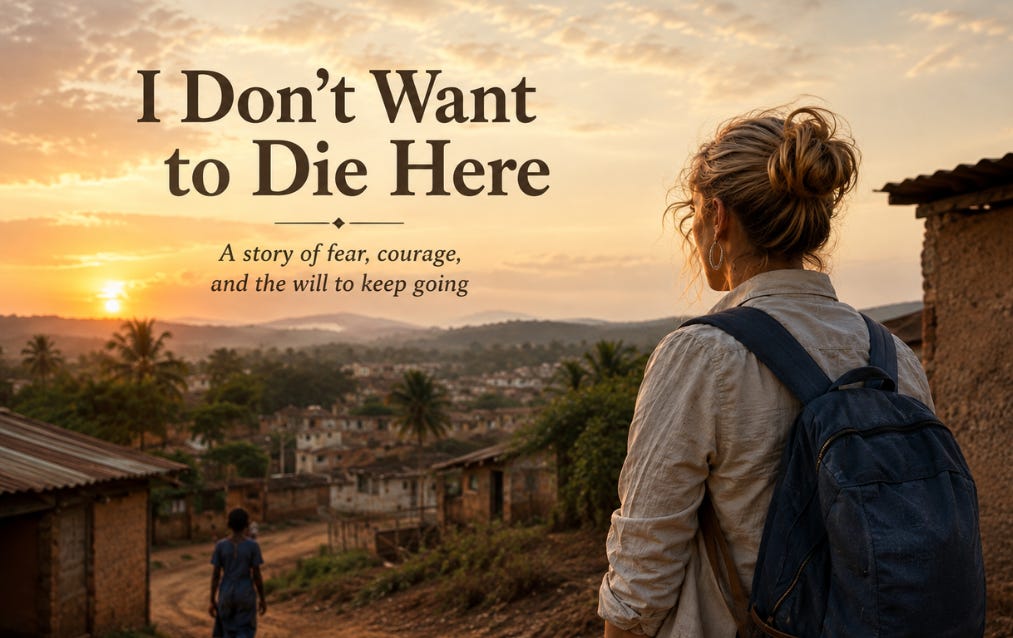
I had just returned from a week with friends in a small village on the edge of the Sahara Desert called Katsina. It was dry, hot, and barren, and although I had enjoyed my visit, I was happy to be home again among the trees and greenery.
I was ready to return to teaching.
By Sunday morning I felt unusually tired, but I assumed I had simply spent too much time in the sun. The next day I developed a slight headache and felt stiff and achy. I carried on with my classes, convinced whatever it was would soon pass.
Instead, it became worse.
As the days went by, my energy disappeared, and my fever climbed higher.
One afternoon, after classes, I lay down on the sofa, covered myself with a sheet, and drifted into a restless sleep.
While I slept, one of my students came to see me.
She took one look at me, turned around, and ran to fetch the headmistress.
Within minutes, the headmistress arrived. One glance was all she needed.
She bundled me into the back seat of her car and drove me to the civil engineering camp near our school. Although there was a hospital in the village, the engineering camp had a small clinic staffed by a British medical team.
It proved to be the right decision.
The diagnosis came quickly.
Severe malaria.
Within minutes I was in bed with an IV in my arm.
As my fever continued to climb, my world became increasingly unreal. Time blurred. Faces came and went. Sleep and wakefulness merged into one another.
What I remember most clearly were the thoughts that kept returning.
I don’t want to die here.
I want to go home.
I want to see my family again.
Those words repeated themselves over and over as the fever carried me in and out of awareness.
For three days the medical staff worked to bring my temperature down. Cold showers became part of the routine. Someone stayed with me around the clock.
Gradually the fever broke.
The fear eased.
My strength slowly returned.
I remained in the clinic for another week before I was well enough to leave.
Looking back, I realize that week changed something within me.
Until then, serious illness had belonged to other people.
Suddenly it belonged to me.
For the first time, I had looked directly at the possibility that my life might end much sooner than I had imagined.
I recovered fully.
In fact, malaria found me twice more over the following years, though neither experience was as severe as the first.
People sometimes say to me,
“You could have died.”
They’re right.
I could have.
But I didn’t.
Looking back now, I notice I rarely spend time thinking about what might have happened. My attention has always returned to what did happen.
I recovered.
I carried on.
Life continued.
Perhaps that’s why I have never been drawn to living in “what if” or “what could have been.”
That week didn’t leave me dwelling on death.
Instead, it left me quietly grateful for life.
And more than forty years later, that gratitude remains.
Great story and revelation… your book shares beautiful stories and wisdom… https://www.amazon.ca/My-Backpack-Was-Home-Adventure-ebook/dp/B0C95Y4S66… You really know how to live the Good Life… The God Gift of Life…
Thank you for sharing such a raw, vulnerable piece of your journey. My heart ached reading your mantra: 'I don't want to die here.' It takes immense courage to look back at moments where life hung in the balance. The way you’ve processed this over the last forty years - letting it leave you with enduring gratitude rather than fear - is deeply inspiring. Your story beautifully reminds us that our most frightening hours can become the soil where a lifelong appreciation for the present moment grows. 🌿🙏